
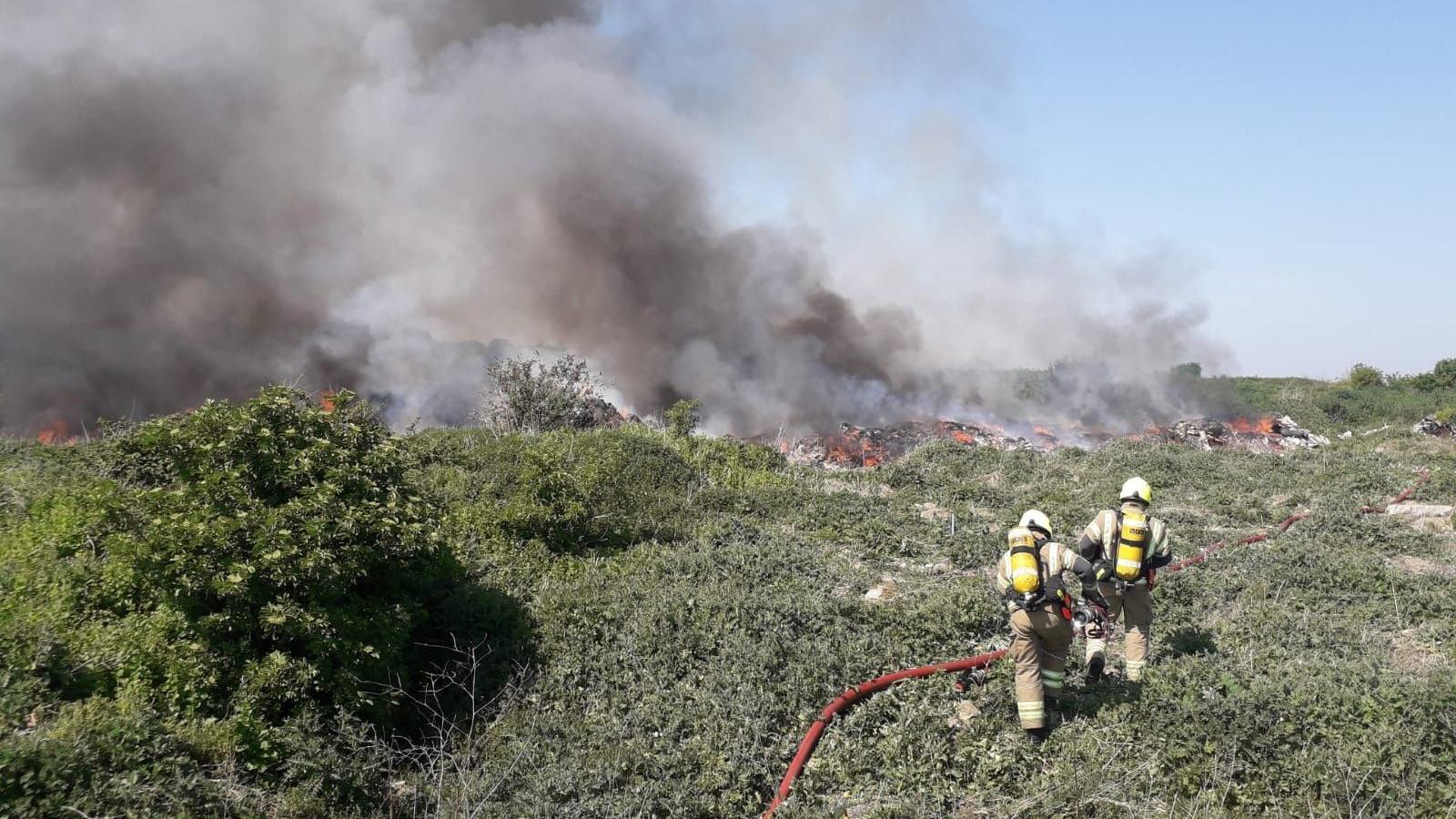

Margaret Mullane MP has also welcomed the establishment of a new All Party Parliamentary Group (APPG) focused on countering the growing threat of wildfires. The APPG will examine best practice in preventing and managing wildfires, which are becoming increasingly common due to rising temperatures linked to climate change.
Margaret raised the devastating fires in Wennington Village and Farm Close, Dagenham, during the summer of 2022, when 34 homes were destroyed on the hottest day of the year. She stressed that wildfires are not only a rural issue but also pose a serious threat to urban communities on the outskirts of towns and cities.
Margaret said: “Residents in Rainham have suffered for years because of ongoing fires, pollution and environmental damage linked to Launders Lane. Local people deserve action, transparency and reassurance that their health and environment are being protected.
I also greatly welcome the establishment of the APPG on wildfires. The devastating fires in Wennington showed that communities in Dagenham and Rainham are not immune to these risks, and it is vital that Parliament works to improve prevention, preparedness and protection for local residents.”
Dagenham and Rainham MP, Margaret Mullane, has however expressed her disappointment after discovering that Arnolds Field, Launders Lane, Rainham was not included on the Environment Agency’s newly published list of high priority waste sites causing concern within local communities.
The Environment Agency announced the publication of the list as part of its Waste Crime Action Plan, aimed at tackling illegal waste activity, improving enforcement and supporting the clean-up of harmful sites across England. However, despite years of ongoing fires, pollution and environmental concerns affecting local residents, Launders Lane was absent from the published list.
Margaret Mullane has now written to the Environment Agency’s Regional Director, Chris Wilson, calling for Arnolds Field, Launders Lane to be formally recognised as a high priority site. In her letter, Margaret highlighted the “number of years and the extent of the pollution that has been endured and impacted on the health of people in Rainham” and described the omission as “quite extraordinary”.